
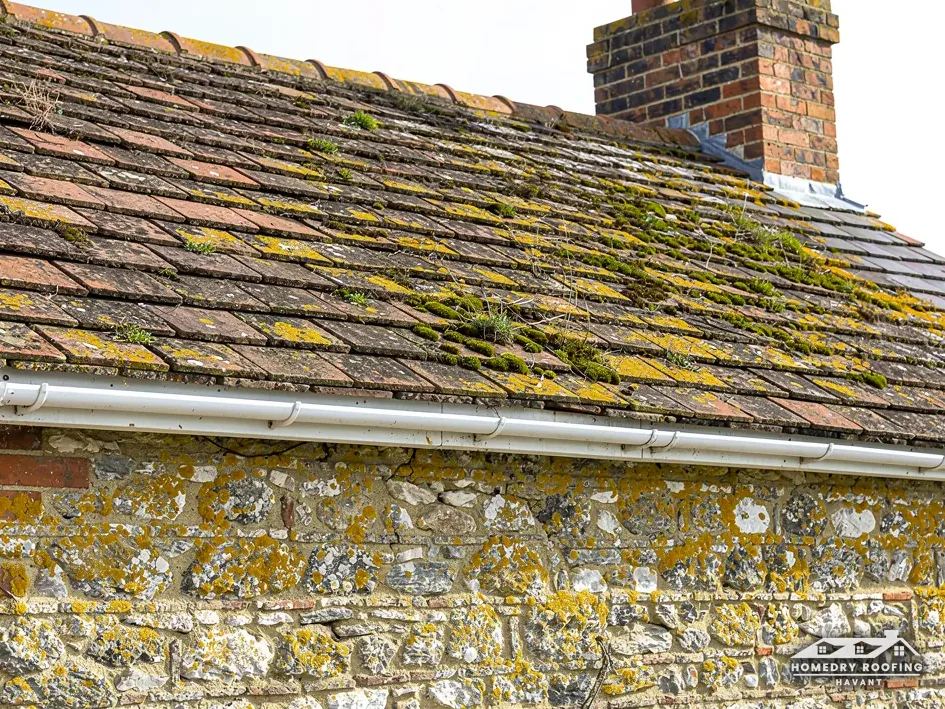
Why the roof is the danger, not the moss
HSE's guidance on roof work puts it bluntly: "almost one in five deaths in construction work involve roof work. Some are specialist roofers, but many are just repairing and cleaning roofs." A moss clean is the sort of job that sentence describes, and it is the one an owner is most tempted to take on with a ladder and a stiff brush on a dry weekend.
The same page adds: "all roofs should be treated as fragile until a competent person has confirmed they are not". From a ladder you cannot see what a roof will take, or where its weak spot lies.
Moss adds a second problem. A thick mat hides the tile beneath it, including a cracked or slipped one, so the surface under your boot may not be what it looks like. You can read the guidance yourself on HSE's roof work page. People who work at height for a living do so with equipment and training behind them, and an owner on a ladder has neither.
What goes wrong with the home methods
Each home method for moss carries its own trouble, apart from the climb itself:
- A jet wash: Marley's cleaning page calls high powered jet washes "not recommended" because they can damage the tile surface.
- Hard scraping or a wire brush: this can crack an older tile or scour its face, and a cracked tile can show up later as a stain indoors, long after the weekend job is forgotten.
- Throwing the moss down: it lands in the gutter and on paths, glass and beds, and the clump that blocks a downpipe is the one nobody sees.
- A shop-bought moss killer: the label has to be read and followed, because the person applying it carries the responsibility if it harms pets or wildlife.
- A nest in the eaves: the Wildlife and Countryside Act protects a wild bird's nest "while that nest is in use or being built", and a roofer checks the eaves, ridge and verge for one before the job begins.
None of these methods beats a survey followed by a proper job, and each one can add a repair to a weekend's work.
What an owner can safely do from the ground
There is plenty that helps, and none of it needs a ladder. The aim is to give a roofer a clear picture before anyone goes up.
- Walk round the house and photograph each slope with the zoom on your phone, from the pavement or garden.
- Note where moss sits: the ridge, the lower courses, around the chimney and in the valleys.
- Look at the gutters and downpipes from below for moss, overflow marks or a sagging run.
- Watch the eaves for birds flying in and out, and pass that on.
- Write down any stain or damp indoors and the room it is in.
Pass the pictures on with a note of which room has damp, and a roofer can start to follow the route before the visit.
Stay off garage, porch and extension roofs as well. A low roof can be as fragile as a high one, and the second question below covers the garage case. Our answer on whether moss damages roof tiles explains why a look from the ground is worth having, and why what sits under the moss matters more than the moss itself.
What a roofer does that you would otherwise have to
A roofer starts by deciding how to reach the slope safely, whether by roof ladder, tower or full scaffolding. If scaffolding has to go up over the pavement, we arrange the licence with our scaffolder, and it sits inside the written quote. Before the work starts, loose or slipped tiles are noted along with any sign of a nest, and you are told what was found. Sheets go down to protect the ground, and once a slope is clear the roofer looks at what the moss was covering.
The moss then comes off a slope at a time, with the roofer reading each tile as it clears. It goes into bags, the gutters get cleared on the way down, the tops of the downpipes are checked for a plug and the paths are swept, so the site is left clean.
Our guide to how moss is removed from a roof goes through each step. For the service as a whole, see roof cleaning and moss removal. After a survey you get a single written price, so the figure is known before anyone climbs.