
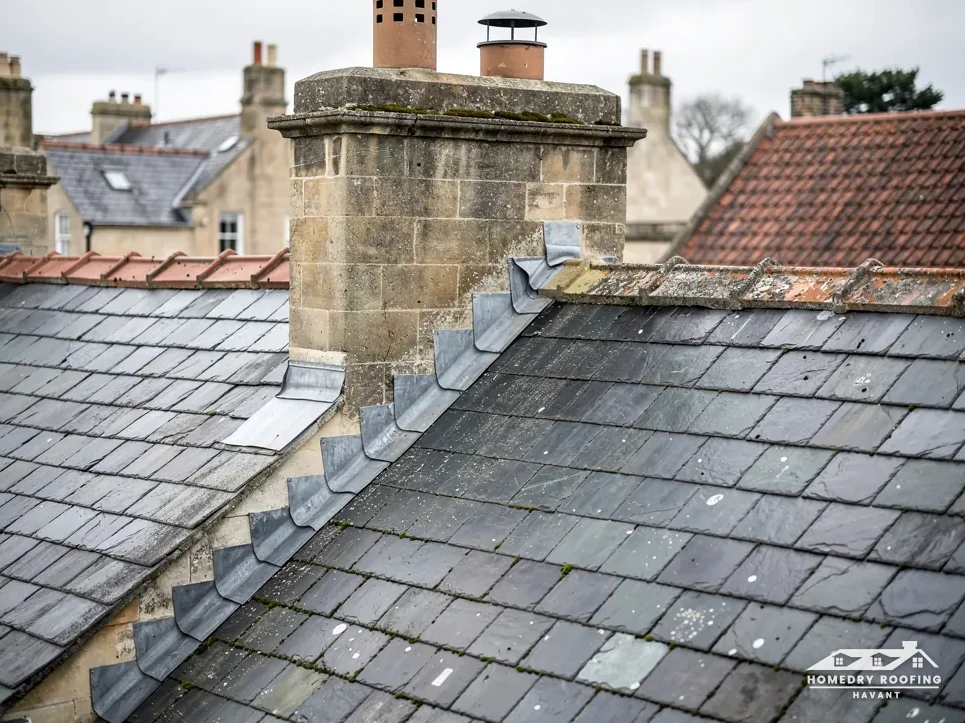
Stacks
Where brick rises through the roof and lead is dressed up each of its faces.
A lifted edge, or mortar gone soft in the joint above it, lets rain track down the flue wall.

Shawford lies 27.2 road miles north-west of Havant; stacks, lead and flat roofs there are inspected at the point where each trouble begins, and the work is priced once, in writing.
10-year workmanship guarantee, in writing
Where brick rises through the roof and lead is dressed up each of its faces.
A lifted edge, or mortar gone soft in the joint above it, lets rain track down the flue wall.
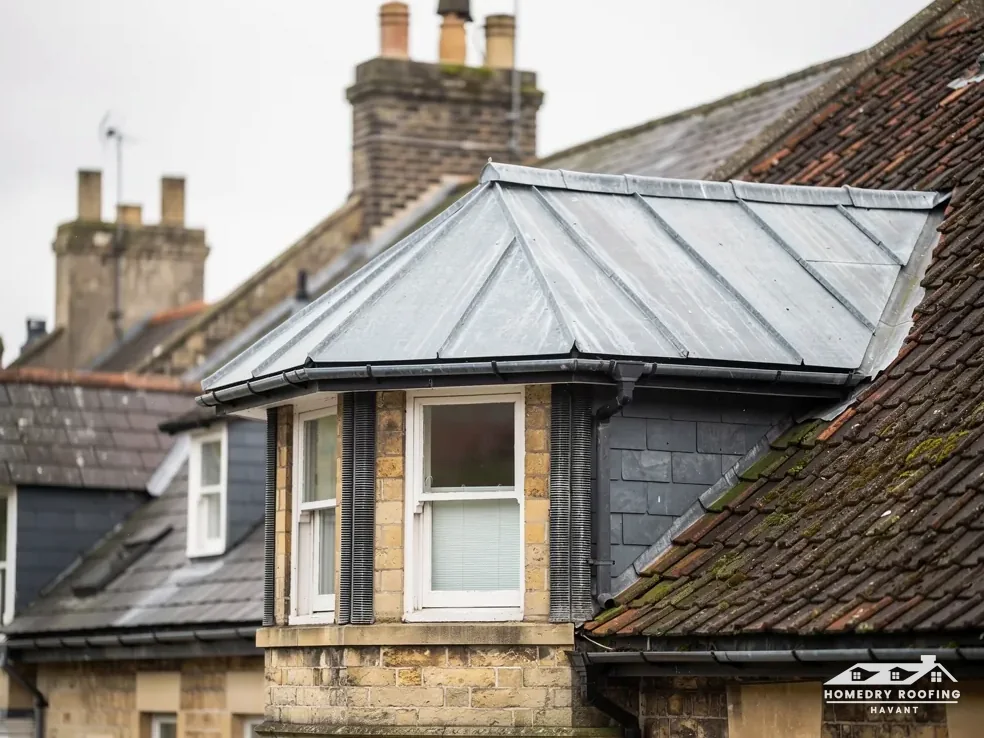
Where lead tucks into a mortar joint to cover the gap beside a wall.
Once the top edge lifts, rain runs in beneath the lead and soaks the wall under it.
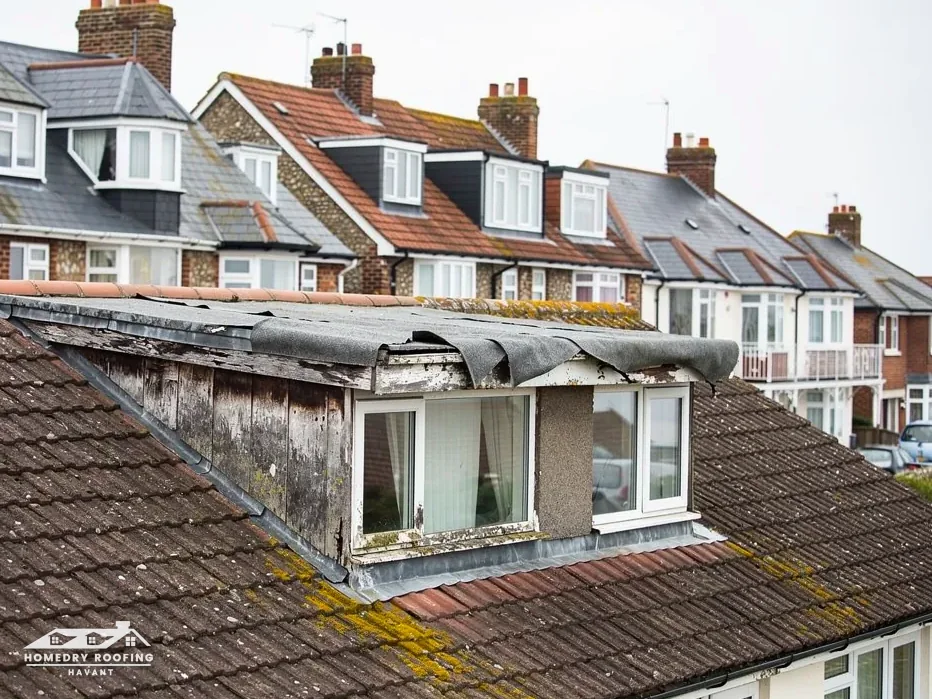
Where a flat covering climbs the wall that rises beside it.
A split along that turn lets a pool drain into the wall instead of the outlet.

A stack stands alone above the roof, with no shelter and nowhere to hide a joint.
Nothing on a roof stands taller or less sheltered than the chimney, so the survey climbs to it early. We begin where the brick leaves the slope. Lead is dressed up each face of the stack and pushed into the mortar joints, and an edge that has lifted lets rain slide behind the metal. Higher up we look at the brick itself, the cement cap across the top (the flaunching) and the pots set in it. A torch in the loft, aimed at the framing round the chimney breast, shows whether a stain comes from the stack or from the slope beside it. Our chimney repairs page sets out what a rebuild involves, and the leadwork page describes the flashings that surround one.
Shawford House is listed Grade II*, while Little Cranford Cottage and Shawford Mill are listed Grade II. Roof work that alters the character of a listed building needs listed building consent, so the list entry deserves reading in full before anything is ordered, boundary and all. Twyford and Compton Street are the two conservation areas close to Shawford, and Winchester City Council will confirm if a given address sits inside either. In a conservation area a straightforward re-roof is still normally permitted development, though any Article 4 direction removing further rights would be the council's to confirm on your own road. The planning guide for roof work sets out the rest, and this page defers to it.
Where a stack belongs to a listed home we photograph it from each side before any work is discussed, so that the council and you are looking at the same thing. If the stack proves sound and only the lead has lifted, the findings say exactly that, and the repair stays small. A stack that leans is reported with its own photographs.
A stain on a chimney breast can mislead, because the damp may be coming in at the stack, the slope beside it or a gutter higher up. From the loft we trace the staining back along the timber until it stops, and the roof above that point is where we climb to next. You get photographs of both views in the findings, so the stain indoors and the cause outside sit side by side.
An upstairs chimney breast marked with a brown line, or wallpaper starting to bubble beside it.
Lead lifting along the stack, or crumbled pointing, where rain runs in beneath the metal and tracks downward.
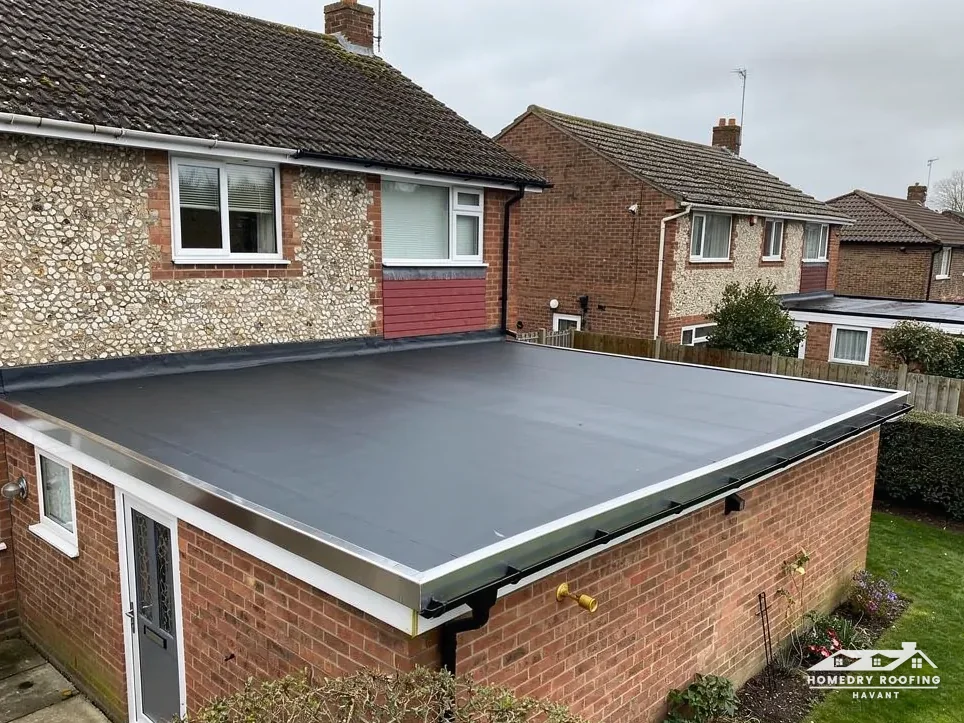
Clear the outlet and see. If the pool drains and the surface stays sound, the outlet alone was the trouble. If water still stands, or the surface is cracked and lifting, then the fall or the covering is at fault, and the survey explains which.
On a flat roof the covering climbs the house wall for a short height. That is the upstand, and it is where we spend longest, because rain from the whole surface meets it. We look for splits along its top edge, lifting at the corners and any place where lead or a trim has parted from the brick. Across the surface we note any pool left a day after rain, any blister and any seam that has opened. Standing water points to a lost fall or to a stopped outlet, and those need different repairs, so we tell you which yours is. Our flat roofing page describes the coverings used if the roof must be relaid.
At the outlet we clear leaves and grit and watch the water move. From there the run continues to a gutter or a pipe, and we follow it to the point where it empties. Dripping joints, a bracket that has dropped, a pipe emptying onto the wall: a ladder is enough to read all three, and each is a modest job while it is young. A soft fascia board will not keep a gutter level, so we press it as well, and say what we find. Where the water lands after the pipe is noted too, with a photograph.
The Environment Agency's flood map marks land near Shawford as Flood Zone 3, and that tells you about the ground rather than about the roof. The survey itself is unchanged by it. What the zone does bring to mind is the downpipe: we note where each one discharges and whether the water drains away from the wall, since a gutter that works but empties against a foundation is half a job. When the survey is done you have the findings, the photographs and one written total price.
A flat roof has two jobs: shed the pool, and hold the edge.
The morning after rain is the time to look at a flat roof, from a window, or from a ladder if that is safe for you. Water lying in a pool tells us about the fall, while a dry surface above a damp ceiling points to an edge or a seam. Photographs of both, taken with the date, help us compare what you saw with what we find on the day of the survey.
Map of Shawford and the places around it, with the dashed line of our 30-mile service area from Havant. The same places are listed below the map.
The base of the stack comes first: there the lead rises up each face, and we test whether its top edge still sits firmly in the joint. After that we study the pointing, the cap and the pots from above. From the loft, staining on the framing near the chimney breast tells us whether water is arriving through the stack, the slope or a gutter. You receive photographs and findings with a repair to suit: lead dressed again, pointing renewed, or the stack taken down and rebuilt if the brickwork has failed. When only the lead has lifted, the report says so, and the job stays small.
These are separate matters. On building regulations, the Planning Portal draws two lines: the two limits are less than 25 per cent of the building envelope and less than 50 per cent of the roof. Stay under both and no building regulations application is normally needed, but a new covering 15 per cent or more heavier does need approval. Winchester City Council's building control team (01962 848 176) takes questions on it. Planning is dealt with in our planning guide, and for Shawford addresses we confirm the route with the council before the first tile is lifted.
Putting scaffolding on the public highway takes a licence under section 169 of the Highways Act 1980; in Shawford it comes from Hampshire County Council. Hampshire County Council's page reads: "Scaffolding companies must apply on behalf of their customers." Hampshire County Council's fee is £211.90 on application for the first 2 weeks and £72 for each additional 2-week period, and the earliest a licence can begin is ten clear working days from the date it is applied for. We arrange it with our scaffolder and agree the start with you first. A job that overruns needs a new application, because extensions are not offered.
Shawford House is listed Grade II*, and Little Cranford Cottage and Shawford Mill are both Grade II. Where roof work would affect the special character of a listed building, listed building consent is needed from Winchester City Council. It makes no difference that a roof is only being repaired; the test is character. Look up the list entry for the building in question before work is planned, since it fixes what is protected, and put any doubt to the council instead of settling it by guesswork. Once the council has replied, we file its answer with the survey photographs.
Two lie close to Shawford: Twyford and Compton Street. Winchester City Council takes enquiries for both, handling Twyford for the National Park Authority, so the council can confirm whether a given address is within either. In a conservation area a house re-roof of the ordinary kind is normally still permitted development, and any Article 4 direction removing further rights would be the council's to confirm, so check with Winchester City Council about your own road. A house outside both still gets the ordinary checks, and the survey notes record what the council told us. Our planning guide holds the rules for roofs, each with a source.
Not in itself. Flood Zone 3 on the Environment Agency's map reaches land near Shawford, but the zone speaks only of the land, and no roofing requirement follows from it. A roof is mended by finding the entry point, wherever the map draws its edge. Drainage is the one place the two meet: we check that each downpipe empties away from the wall and that nothing blocks its outlet, and if a gutter has been overflowing we begin with its joints and its fall, then write down what the photographs show, so the cause is on paper and not just remembered.
Yes, where the brick is sound. Lead that has lifted can be re-dressed, pointing can be raked out and renewed, and a cracked cap can be relaid, all without taking the stack down. Rebuilding is for brick that has gone soft or a stack that has moved. We say which case yours is, show the evidence in photographs, and put a repair ahead of a rebuild whenever the existing work is sound. For a listed house the same findings go to Winchester City Council so that consent, if needed, is asked for on facts.
It states the work, the covering and whether the total covers VAT and scaffolding, and it follows an inspection of the roof. The price we give is a single written total, and the findings come attached; the pricing is good and fair. It also says what is being renewed and what is being left alone, so the scope is plain. Should a second quote skip scaffold or VAT, get both added in writing before comparing, because a lower figure can simply cover less, and the missing part reappears later as a bill nobody planned for.
You'll get one written total price.
Fill in what you like. It opens WhatsApp with your message ready to send.